
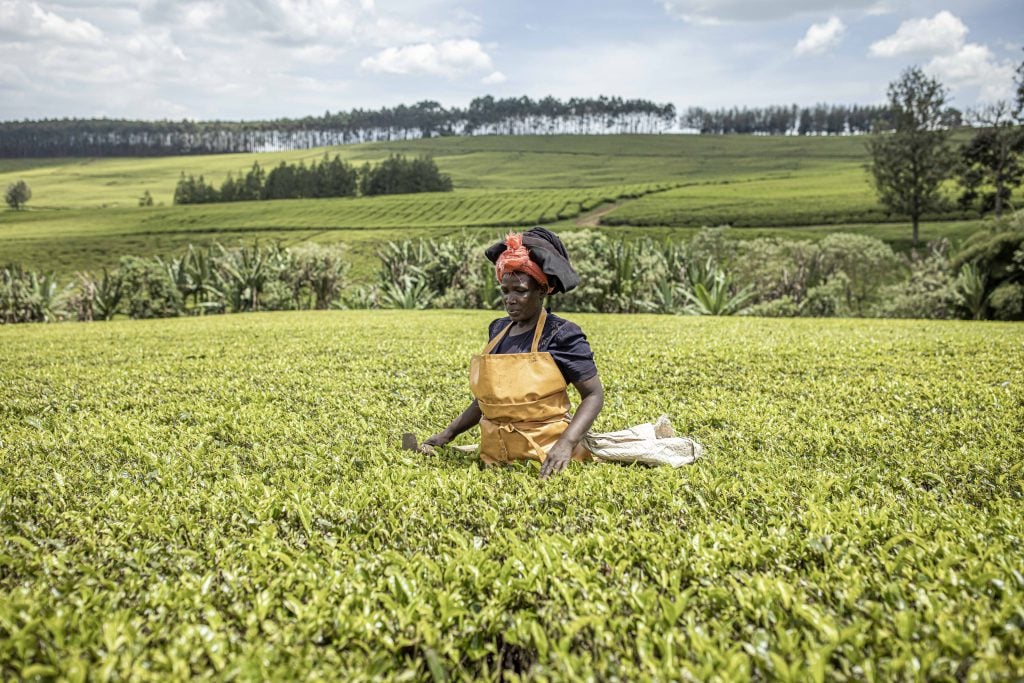
Tea is one of Kenya's major exports and is a key driver of the country's economy, supporting approximately 5m of direct and indirect employment across the value chain. Production increased 24% from 458.85m kg in 2019 to 570.26m kg in 2023, according to data from Kenya Tea Board (TBK).
This makes Kenya the third largest tea producer in the world after India and China. Meanwhile, export revenue from tea reached a record 2024 Sh21.521 billion ($1.7 billion). This is up from Sh18.05 billion ($1.4 billion) in 2023.
Pakistan is the top export destination for Kenya tea, importing 206.27m kg in 2024, accounting for 34.7% of the country's total tea exports. Other major buyers include Egypt (86.90m kg), the UK (57.44m kg), UAE (30.50m kg), Russia (28.46m kg), India (17.13m kg), Saudi Arabia (15.13m kg), Yemen (14.13m kg), Iran (13mm kg), and Iran (13.13m kg). Collectively, these 10 countries (most of Kenya Tea's long-established markets) accounted for 81% of tea exports in 2024.
Despite positive momentum in recent years, production declines were recorded in the first quarter of 2025. In January, output decreased from 58.95m kg the previous year to 54.36m kg. Production in February fell to 44.61m kg compared to 55.44m kg the previous year, but the March figures fell sharply to 37.93m kg from 54.34m kg in the same month in 2024.
TBK believes the slowdown is attributed to poor rainfall and disruption in global trade. “The tea performance is under pressure from the weather and global shocks. Kenya produced 51.78m kg of tea in April.
Supporting smallholder farmers
The Kenya Tea Industry is supported by two major production systems: small-scale farmers and large-scale real estate. Major multinational companies such as Unilly Bati Kenya, James Finlay and Eastern Produce are engaged in large-scale tea cultivation and processing, collectively making up about 40% of the country's tea farming volume.
Smallholder farmers who normally grow tea on less than half the acres produce 60% of the country's tea. They are organized into cooperatives under the Kenya Tea Development Agency (KTDA), which manages tea factories and provides essential support services for tea farmers.
KTDA collects green tea leaves from more than 600,000 smallholder farmers and processes them in 70 factories spread across Kenya's tea-growing areas. Utilizing the Crush, Tears and Curl (CTC) method, KTDA's factory produces black tea suitable for global blends. KTDA sells tea through Mombasatie auctions, direct sales and factory door sales. KTDA is also engaged in policy advocacy and helps to focus attention on the opportunities and challenges facing the industry. Among the issues that KTDA has been involved in recently, climate change is climate change.
KTDA Chairman Chege Kirundi argues that smallholder farmers need to increase their support to strengthen their climate change resilience.
“We are investing in drought-resistant tea varieties and efficient irrigation systems to help farmers adapt,” he said in the feature to celebrate International Tea Tea Day at the Gacharage Tea Factory in Murangga Town in May.
Speaking at the same event, TBK Chairman Ndung'u Gathenji reflected KTDA's sentiment about the need to strengthen smallholder farmers' ability to combat climate change. “Kenya's tea sector has long been a global leader renowned for its quality, quantity and consistency, but when celebrating its achievements, we must also face the reality of climate change,” he pointed out.
According to KTDA's climate risk mapping study, climate change could reduce tea yields by up to 20% in the coming decades if efforts to increase farmers' resilience are not amplified.
Beyond climate change, other challenges faced by smallholder farmers in the tea sector in Kenya include concerns about low wages for factory workers and field workers, rising production costs and stagnant global tea prices. All of these contribute to the constrained income of farmers and workers. In fact, a recent study by the Fairtrade Foundation found that only one in five tea workers and one in farmers in Kenya earn enough to support families with essentials each month.
Increased local value addition
According to TBK, value-added tea exports in 2024 reached 28.90m kg in 2024, accounting for just 5% of Kenya's total tea exports that year. To change this, Africa's biggest tea producers and exporters are increasingly focused on increasing the addition of local value as they have set an ambitious target of increasing the share of value-added exports by 10 times by 2027.
“This strategic move envisages creating jobs, increasing revenue and developing companies along the te-value chain,” said Rachel Wanyoike, managing director of Solidaridad East and Central Africa.
“All teas, including green, black, white, matcha, and Pu-erh (fermented tea), are made from the Camellia sinensis plant. Increased tea value involves absorbing additional features into the product or integrating more of the production process of its origin,” she said.
“Additional value can increase the income of smallholder farmers by up to 40% compared to traditional teas that are not worthy. Practices include packaging, branding, blending, and obtaining quality certification. Production of flavored tea or instant varieties represents other advantageous opportunities.
Tea accounts for around 96% to 98% of Kenya's total production, while specialty teas such as green, white, oolong and purple make up a small but growing share.
Wanyoike points out that global demand for specialty tea is steadily rising as more marketers promote their health benefits. “There is growing demand for specialty teas like the native Kenya Purple Tea, known for their health benefits such as reduced caffeine and high levels of antioxidants.”
People like Flora Mutahi, founder and CEO of Melvin Marsh International, who owns Melvins Tea, have unlocked opportunities as the increased demand for specialized tea. Founded in Kenya in 1994, Melvins Tea offers specialized teas such as flavoured black and green tea, fruit and herb infusions, and orthodox teas. They were the first to introduce flavored tea to the Kenyan market in 1995, and now sells products in Kenya and around the world.
Mutahi tells African businesses that the company uses “100% natural Kenyan-grown ingredients” and processes tea domestically, creating direct and indirect jobs locally.
She believes the company is rated the company's capabilities as “innovation and customer-centric” in order to make the niche in the specialty tee category “innovation and customer-centric.”
“Being very customer-centric has helped us grow. We have just launched instant teas with milk and sugar. Health is another important consumer trend that drives the category, and we have introduced the aroma of health,” she says.
Mutahi claims that improving access to high-quality packaging materials will help grow value-added tea exports in Kenya. Many Kenya Tea Processors struggle to source high-quality packaging paper that meets international standards for shelf life, branding and food safety. This limits access to premium export markets that justify investments in local processing and branding.
“The biggest challenge is to source enough reliable packaging materials to sit on a New York shelf,” she explains. He added that even if packaging materials are accessible, the lack of brand awareness in overseas markets could hinder access to the market.
Mutahi argues that stronger country marketing and export promotions should be encouraged to ensure locally produced TEA brands lead premiums in the global market.
“It's difficult to promote brands in foreign markets, especially when the public and private sectors are not all in one place. A unified approach is needed, just like the way South African government and the private sector are promoting country marketing and brand building for the wine industry.”
