
In recent years, there have been major changes in security guards from the perspective of Western banking in Africa. Some of the British and French traditional heavyweights have withdrawn since the Covid-19 pandemic, but at least one US counterpart has begun to come in.
Although there is often withdrawal from the frontier market during periods of intense global instability, this two-way movement suggests that there has been no particular crises of trust in either Africa in general or in the continental banking sector in particular.
Many European banks are trying to concentrate on their core markets in line with the broader commercial trends of companies in many sectors that minimize risk. High operating costs, high rates of bad debts (NPLs), regulatory constraints, and low profits are also all less attractive in many metrics across Africa than in other emerging market regions.
McKinsey & Co calculated that profitability in Africa's five largest banking markets (Egypt, Kenya, Morocco, Nigeria and South Africa) fell by 2% between 2016 and 2022.
Basel III regulations forced banks to strengthen their capital base, while money laundering and terrorism laws forced them to strengthen surveillance of their operations in small markets. International banks appear to have become particularly cautious after French bank BNP Paribas was fined $8.9 billion in 2014 by US prosecutors for violating sanctions against Sudan, Cuba and Iran.
Retail banking is generally not particularly profitable in many African markets, but local knowledge tends to be extremely important. At the same time, mobile banking has rapidly increased Levov's competition, but many African banks offer foreign currency accounts.
The European sales process began in 2016 when Barclays began selling African assets. In 2016, it sold its Egyptian subsidiary to Attillaliwafa Bank in Morocco, and the Zimbabwean derivative sold to Malawi's first merchant bank the following year. It also began cutting 62.3% stakes in one of ABSA, one of South Africa's Big For Banks, in 2017. This was completed in 2022 and in the process lost access to ABSA's operations in dozens of other African markets.
Also, in 2022, the UK Bank's standard charter taard, previously focused on Asia and Africa, announced it would leave five African countries. It quickly moved to sell its subsidiaries in Angola, Cameroon, Gambia and Sierra Leone to Nigeria's Access Bank, and was recently reported to have completed the sale of its retail and asset business in Tanzania in June 2025. However, it maintains its corporate and investment banking operations in Tanzania, Botswana, Uganda and Zambia.
In November 2024, it also announced that it was investigating the sales of wealth and retail banks (WRB) companies in Botswana, Uganda and Zambia, and was working with a new strategic prioritization plan to investigate “incremental investments in key asset management businesses.”
Standard Chartered's sale program is not limited to Africa, and includes Jordan and Lebanon, but is committed to much of the rest of Asia. As for Africa, it appears to be concentrated in African businesses, which have performed best in the past few years, with assets in Kenya rising in quarterly in 2023 to KSH185.5 billion ($1.4 billion).
Group CEO Bill Winters commented: “We will continue to assess the effectiveness of our global business model and take regular action to focus our resources when we have the most distinctive client proposals. We have been operating for 170 years and have been investing in Africa, which is at the heart of our global network.” Since 2021, the bank has more than doubled its wealth assets under management in sub-Saharan Africa. This is largely due to the great growth of Kenya and Nigeria.
HSBC hopes to complete sales of its South African business to the country Firstrand Bank by this October. Although there is no retail banking business in the country, it has been providing investment and business banking services since the apartheid system ended 30 years ago. Although the UK Bank has always focused on Asia rather than Africa, it has agreed to provide stocks and securities clients with access to the South African market through new transactions with ABSA Bank.
If international banks withdraw from Africa's largest bank market, the selling process is perhaps the most surprising. Both BNP Paribas and Crédit Agricole are closed in South Africa, with the latter also selling Moroccan derivatives in 2022.
One of France's largest banks, Societe Generare sells its operations in 12 countries in the north, west and central Africa, or is in the process of selling its activities. We also closed our highly herald mobile wallet, Yup. There is a great competition between the mobile money sector and mobile banking and mobile money. So it's not surprising that not all products have been successful.
African banks break into violations
The negative effects of sales in individual African banking sectors include reduced access to foreign exchange, reduced competition, and loss of banking relationships for correspondents.
Some African markets may now offer lower returns and relatively high risk, but overall, this process appears to be myopia given the fact that the seven fastest growing economies in the world are in Africa, and that the continent is increasingly promoting global demographics and therefore consumer growth. According to UN figures, the population in sub-Saharan Africa alone will increase from 1.3 billion to 2.2 billion by 2050 and to 2.2 billion by 2100.
In November, the Cameroon-based NKAFU Policy Institute said the financial infrastructure provisions needed to promote payments within the African Continental Free Trade Area (AFCFTA) were “at risks due to the recent withdrawal of European banks from Africa.” He also said, “it could pose challenges to trade finance, correspondent banking relationships, and the availability of foreign exchange.”
Although the situation varies from year to year, as African banks as a cohort are steadily increasing, this withdrawal creates an important opportunity for continent-based banks to quickly expand. African banks benefit from the withdrawal of competitors in that they purchase many of the assets sold by British and French banks, and otherwise customers have to switch banks.
Established Digital First African banks are bolstering the range of retail and small business products they offer through digital platforms. In any case, international banks are more reluctant to fund small businesses in Africa and serve potential retail customers who are not wealthy. However, Western Bank's losses could be felt more enthusiastic in corporate and investment banks, at least initially.
The acquisition from Standard Chartered has also accelerated Access Bank's continent-wide expansion. Roosevelt Ogbonna, Group Managing Director of Access Bank, said the bank's new subsidiary will support a five-year growth plan using its technical capabilities to build new relationships in Africa and internationally, helping to efficiently process global payments and remittances.
It will be interesting to see if this process will create the power of new African banks. Guinea's Vista Group and Burkina Faso's Coris Group both snapped their assets after withdrawing French banks. Furthermore, while Moroccan companies are one of the biggest beneficiaries, it was Groupe Holmarcom and Saham Group that bought French subsidiaries rather than Morocco's largest traditional bank.
Our interest against grain?
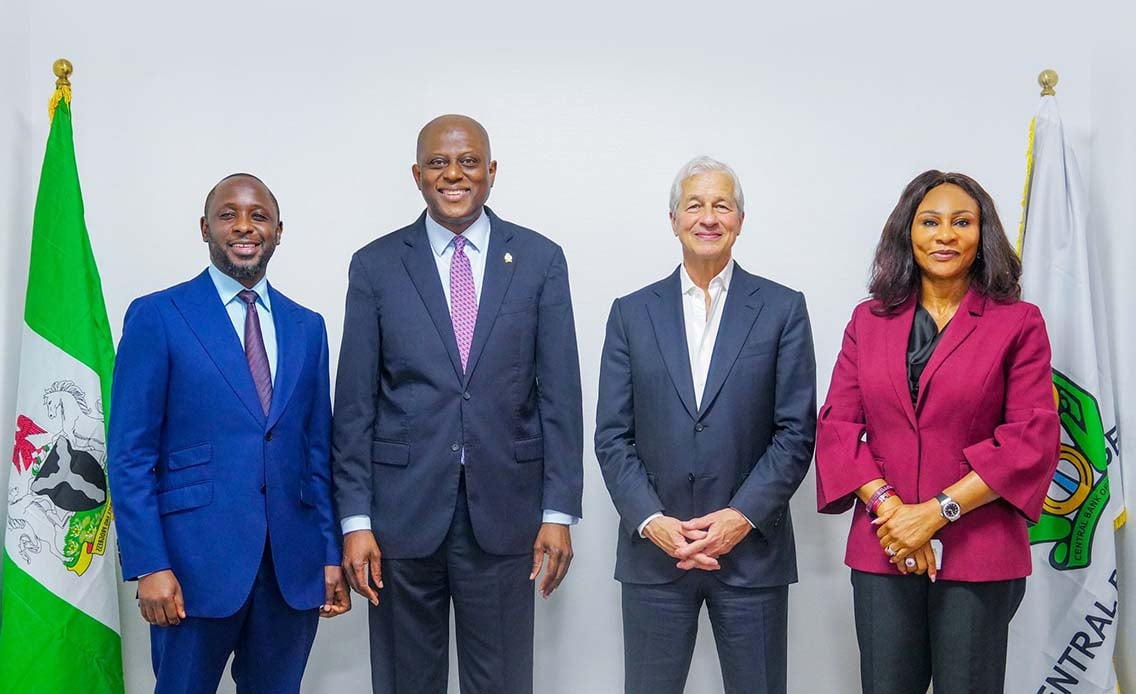
European banks have withdrawn from some African markets entirely or from certain bank segments, but one US giant is actually trying to expand the continent. JP Morgan, already operating in Nigeria and South Africa, is in the process of entering the commercial and investment banking markets in Kenya and Ibolia as part of its plan to gradually expand in Africa by securing new banking licenses.
The process is rather slow, but last year it was permitted to open representative offices in both countries. Despite being one of the world's largest banks, it doesn't appear that African financial services regulators are speeding up the regulatory process for US banks.
Competing in already busy markets will be a major challenge, especially in local banks, Hub Kenya. The number of commercial banks in the country fluctuates, but generally exceeds 40, making it one of the most banking countries on the continent. JP Morgan will also face competition with Chinese banks for Kenya's development and infrastructure financing, including industrial and commercial banks of China and China Development Bank.
US banks still have far more limited operations in Africa than their French and British counterparts. Citigroup is the continent's most representative US bank and operates in 12 countries, but JP Morgan, Goldman Sachs and Bank of America have only six, even after JP Morgan opened two new subsidiaries.
However, they are key players in the corporate sector as the five biggest African mergers and acquisition deals were advised by US banks and Morgan Stanley led the way in the first half of 2024. US banks are also deeply involved in project finance, supporting the lobit corridor project to expand Angola's Benguela Railway to Zambia.
The fact that US banks are beginning to raise Africa's interest at least as European banks are withdrawing, suggests that this trend is not driven solely by the lack of attractiveness in African markets. There are clear obstacles to the form of low profits, regulatory concerns, and high rates of bad debt (NPL) by international standards, but at the same time, the continent could be increasingly favorable due to the increase in cross-border trade volume as a result of the AFCFTA and the rise in potential clients that arise from rapid population growth.
However, it is easy to overlook the role of African banks in this process. They tended to know their markets best, and soon managed to deploy new technology and buy assets from retreating UK and French banks. The sale banks aren't saying that, but there may be some competing elements from their African counterparts, at least in the retail sector.
