
var googletag = googletag || {};googletag.cmd = googletag.cmd || ();
googletag.cmd.push(function() { googletag.defineSlot( '/21796171171/728×90', (728,90), 'gpt-ad-5127159466751-0' ) .addService(googletag.pubads()).setCollapseEmptyDiv(true); window.advadsGamEmptySlotsTimers = window.advadsGamEmptySlotsTimers || const timers('gpt-ad-5127159466751-0') = setTimeout( function () { const id = 'gpt-ad-5127159466751-0'; document.dispatchEvent( new CustomEvent( 'aagam_empty_slot', {detail: id} ) ); delete ( timers(id) ), 1000 ); if ( typeof window.advadsGamHasEmptySlotListener === 'unknown' ) googletag.pubads().addEventListener( 'slotRequested', function ( ev ) { const id = ev.slot.getSlotElementId(); if ( typeof timers(id) === 'unknown' ) { return; } clearTimeout( timers(id) ); timers(id) = setTimeout( function () { document.dispatchEvent( new CustomEvent( 'aagam_empty_slot', {detail: id} ) ); delete ( timers(id) ) }, 2500 ) } ); googletag.pubads().addEventListener( ev ) { const id = ev.slot.getSlotElementId(); if ( typeof timers(id) ) ) { clearTimeout( timers(id) ); delete ( timers(id) ); } if ( ! ev.slot.getResponseInformation() ) { document.dispatchEvent( new CustomEvent( 'aagam_empty_slot', {detail: id} ) ) } ); googletag.enableServices(); googletag.display( 'gpt-ad-5127159466751-0' );
;new advadsCfpAd( 60218 );
For many South Africans, safety has become an expensive expense rather than an expectation. South Africa faces the continuing challenge of high rates of violent and contact crime. Trends and perceptions of real estate crime vary by region, but recent crime statistics, including thousands of murders and tens of thousands of assaults and rapes each quarter, highlight continued safety concerns.
According to 2024/2025 statistics, home invasion remains the most experienced crime affecting South African households. Although this is a terrible statistic, it provides an opportunity to ensure safety and security through community safety as a paid service.
In certain townships, residents are taking it upon themselves to provide safety. These services range from warning early morning commuters about safety to helping older people navigate safely through crowded city centres.
With the number of unemployed people on the rise, implementing community safety as a business opportunity will not only provide jobs for young people, but also increase safety for people in particularly vulnerable communities.
In this article, we look at what community safety is, what it entails, possible business ideas around it, and the regulations that govern it.
What is community safety?
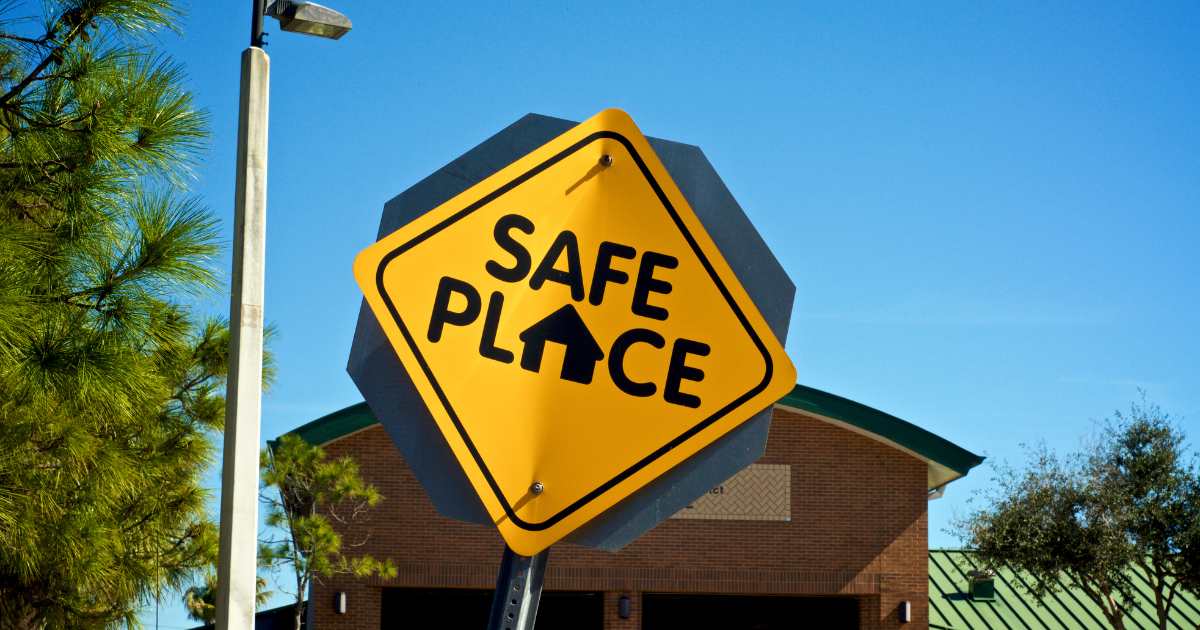
Community safety is a comprehensive, multi-agency approach aimed at reducing crime, disorder, and fear of crime by bringing together local governments, law enforcement, health agencies, and residents to build safe and resilient communities.
Paid services refer to subscription-based private security and monitoring provided by local companies (ADT, Fidelity, CSS, etc.) or digital safety networks. Subscribers typically pay a monthly or annual fee for access to rapid emergency response, neighborhood patrols, armed escorts, and an app-based panic button.
Types of community safety services
Community safety services are collaborative programs designed to protect residents, prevent crime, and manage emergencies. They cover areas such as policing and social crime prevention, bridging the gap between public law enforcement and the public.
These services typically fall into the following categories:
var googletag = googletag || {};googletag.cmd = googletag.cmd || ();
googletag.cmd.push(function() { googletag.defineSlot( '/21796171171/300×250', (300,250), 'gpt-ad-6777173031685-0' ) .addService(googletag.pubads()).setTargeting( 'pageurl', “pageurl” ).setCollapseEmptySlotsTimers = window.advadsGamEmptySlotsTimers('gpt-ad-6777173031685-0') = setTimeout() { const id = 'gpt-ad-6777173031685-0'; document.dispatchEvent( new CustomEvent( 'aagam_empty_slot', {detail: id} ) ); delete ( timers(id) ), 1000 ); if ( typeof window.advadsGamHasEmptySlotListener === 'unknown' ) googletag.pubads().addEventListener( 'slotRequested', function ( ev ) { const id = ev.slot.getSlotElementId(); if ( typeof timers(id) === 'unknown' ) { return; } clearTimeout( timers(id) ); timers(id) = setTimeout( function () { document.dispatchEvent( new CustomEvent( 'aagam_empty_slot', {detail: id} ) ); delete ( timers(id) ) }, 2500 ) } ); googletag.pubads().addEventListener( ev ) { const id = ev.slot.getSlotElementId(); if ( typeof timers(id) ) ) { clearTimeout( timers(id) ); delete ( timers(id) ); } if ( ! ev.slot.getResponseInformation() ) { document.dispatchEvent( new CustomEvent( 'aagam_empty_slot', {detail: id} ) ) } ); googletag.enableServices(); googletag.display( 'gpt-ad-6777173031685-0' );
;new advadsCfpAd( 60219 );
Community Policing Forum (CPF): A regional structure in which neighborhood stakeholders collaborate with the South African Police Service (SAPS) to address crime concerns in a particular area, promote transparency, and build trust. Social Crime Prevention Initiatives: Community-led programs designed to address the root causes of violence, including substance abuse awareness, youth development, gender-based violence (GBV) support, and educational support. Private and Neighborhood Security: Volunteer neighborhood watchers, street patrollers, and contracted private security companies that perform visible patrols and rapid response operations within localized areas.
Regulations regarding community safety services
South Africa's community safety services are governed by a strong legal framework designed to facilitate police oversight, encourage public participation and coordinate local enforcement.
major laws
Community Policing Forum: Mandated by the SAPS Act, the CPF involves community stakeholders, key organizations and the public to identify community policing needs, provide feedback and collaborate with local police stations. Provincial laws: Provinces such as the Western Cape and Gauteng operate under their own safety laws regulating neighborhood surveillance. Private Security: Private and Neighborhood Security efforts should work with the Private Security Industry Regulatory Authority (PSiRA) to ensure that individuals operating in this sector are properly vetted, registered, and compliant with national law.
Launch of community safety project
Community safety business ideas include launching ventures that protect residents, secure property, and improve public welfare. These companies address critical needs while maintaining high profitability through technology solutions, physical security, risk management training, and more.
Technology and digital solutions
Smart Alert Network: Develop a localized, low-cost community alarm or sensor network that links directly to local law enforcement or local CPFs. Neighborhood Watch App: Create a community-specific app that lets neighbors share real-time security alerts, report suspicious activity, and coordinate patrols. Safety Training and Consulting: We offer digital health, security and safety compliance courses for local businesses and remote workers in the region.
Physical security and services
CCTV and Alarms: We sell and install closed circuit television (CCTV) systems, motion sensors, and security lighting for residential and commercial properties. Patrol Service: We provide localized street patrols to quickly respond to registered residents in your neighborhood. Landscaping: Maintaining your neighborhood's landscaping has multiple safety benefits. Pruning trees prevents branches from potentially damaging property or people during storms. Removing leaves from roads reduces the risk of slips and injuries to local residents. Safe transport services: Provide safe and vetted transport services to vulnerable populations such as children (school lift clubs) and the elderly using tracked vehicles. Community Lighting Solutions: We partner with municipalities and local businesses to install and maintain solar-powered street lights to brighten high-risk areas.
5 reasons to become a social entrepreneur
Starting a community safety service business means becoming a social entrepreneur. Social entrepreneurs create and implement solutions that address social problems, focusing on social impact over profit.
Here's why you should become a social entrepreneur
1. Growing impact
Social enterprises are uniquely placed to tackle some of the country's most pressing issues. Research shows that there are over 140,000 social enterprises in South Africa, making a significant contribution to economic development and job creation.
2. The ideal intersection of profit and purpose
Social entrepreneurship offers entrepreneurs a unique opportunity to combine business and social good. For entrepreneurs, incorporating a social mission into their business can attract conscious consumers, differentiate themselves in the market, and even open the door to influence investors. As a nonprofit organization (NPO), implementing for-profit activities can reduce your dependence on donations and provide a stable source of income.
3. Supportive legal structure
In South Africa, social enterprises can operate under a variety of legal structures, including non-profit companies (NPCs), private companies, cooperatives and business trusts. Each structure has distinct advantages. NPCs are best suited for mission-driven goals with limited profit sharing, while private companies offer flexibility and the ability to attract investment.
Hybrid models that combine elements of for-profit and nonprofit organizations are particularly advantageous for transitioning to social entrepreneurship. This allows us to generate income through our commercial activities while reinvesting profits into our social mission, balancing financial sustainability and impact.
4. Personal satisfaction
Growing up in South Africa, many of us witnessed firsthand the challenges faced by our communities, from poverty to crime. This desire for change is what drives many people into social entrepreneurship. Considering some of South Africa's social issues, becoming a social entrepreneur has the potential to not only make profits, but also make you a hero in your community.
var googletag = googletag || {};googletag.cmd = googletag.cmd || ();
googletag.cmd.push(function() { googletag.defineSlot( '/21796171171/728×90', (728,90), 'gpt-ad-9295538321881-0' ) .addService(googletag.pubads()).setCollapseEmptyDiv(true); window.advadsGamEmptySlotsTimers = window.advadsGamEmptySlotsTimers || const timers('gpt-ad-9295538321881-0') = setTimeout( function () { const id = 'gpt-ad-9295538321881-0'; document.dispatchEvent( new CustomEvent( 'aagam_empty_slot', {detail: id} ) ); delete ( timers(id) ), 1000 ); if ( typeof window.advadsGamHasEmptySlotListener === 'unknown' ) googletag.pubads().addEventListener( 'slotRequested', function ( ev ) { const id = ev.slot.getSlotElementId(); if ( typeof timers(id) === 'unknown' ) { return; } clearTimeout( timers(id) ); timers(id) = setTimeout( function () { document.dispatchEvent( new CustomEvent( 'aagam_empty_slot', {detail: id} ) ); delete ( timers(id) ) }, 2500 ) } ); googletag.pubads().addEventListener( ev ) { const id = ev.slot.getSlotElementId(); if ( typeof timers(id) ) ) { clearTimeout( timers(id) ); delete ( timers(id) ); } if ( ! ev.slot.getResponseInformation() ) { document.dispatchEvent( new CustomEvent( 'aagam_empty_slot', {detail: id} ) ) } ); googletag.enableServices(); googletag.display( 'gpt-ad-9295538321881-0' );
;new advadsCfpAd( 60218 );
