
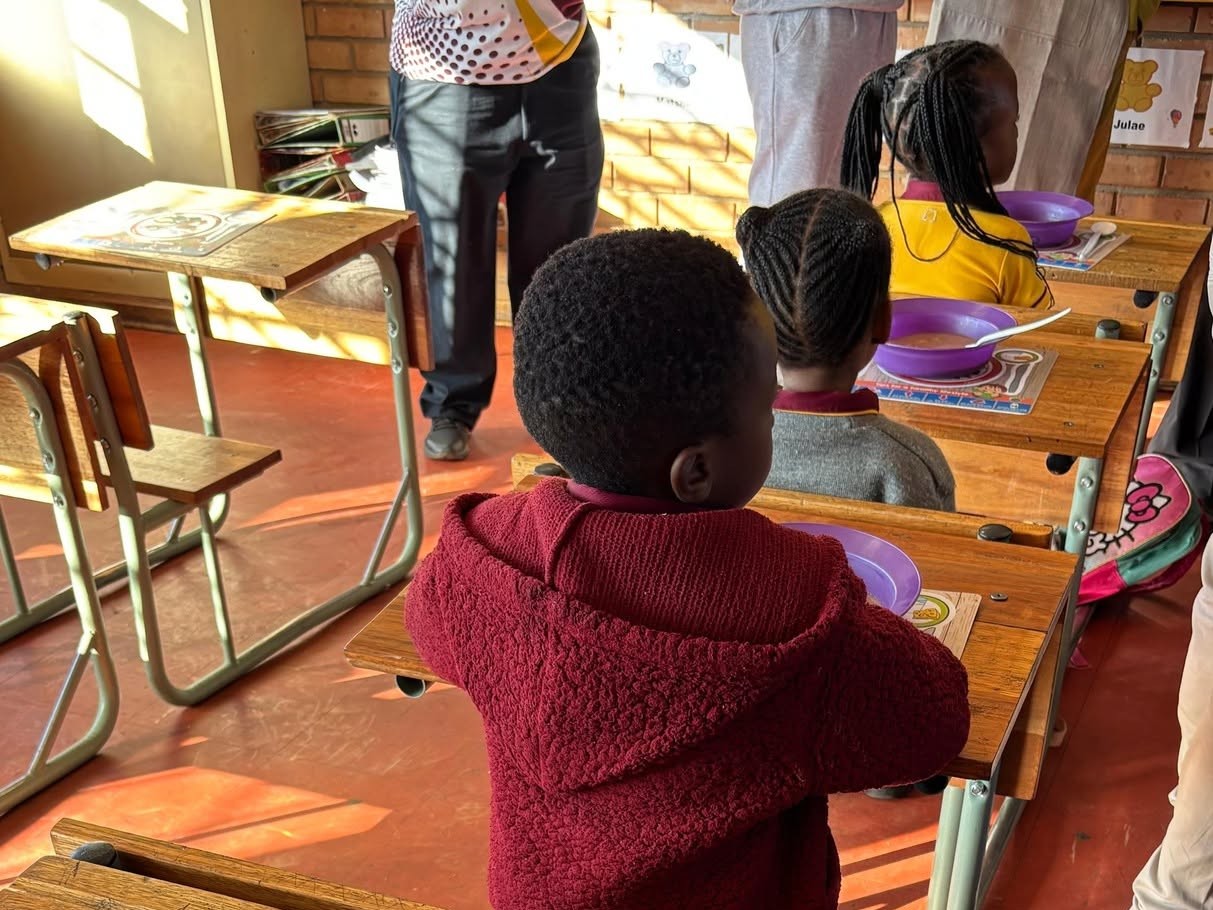
JOHANNESBURG – The Tiger Brand Foundation celebrates 15 years of providing daily nutritious in-school breakfasts to South Africa’s most vulnerable learners.
According to the Department of Basic Education's latest statistical publication, this year, 2026, approximately 8.2 million children are enrolled in South African public (state) primary schools from grades 1 to 7.
Across South Africa, too many learners are unable to concentrate, participate throughout the day, or stay in school because they are not eating.
That's why this issue extends beyond the classroom to children's development and future opportunities.
Food insecurity during childhood also has long-term effects, affecting physical development, cognitive growth, and future employability.
The Tiger Brand Foundation commented on the issue on Friday, July 17, 2026, saying hunger is not just a food issue. It is an issue of education, development and social justice.
Research from the Department of Basic Education and the National School Nutrition Program consistently shows that hunger impairs attendance, concentration and academic performance.
“We often talk about hunger as if it were hunger,” said Kefiloe Mokoena, program leader at the Tiger Brand Foundation.
“But in the classroom, hunger manifests itself in children who can’t read, concentrate, or stay focused.
“This is as much an educational challenge as it is a social challenge.”
Emergency food assistance plays a critical role during crises, from natural disasters to economic shocks.
But relief alone cannot solve hunger. By design, it is short-term and reactive.
“While food baskets can help families get through difficult times, they are no substitute for the stability and dignity that structured school nutrition provides,” Mokoena said.
“Children need to know that a meal will be waiting for them at school every day.”
Long-term school nutrition programs provide consistency, predictability, and a system that supports learning.
These are not charities. They are essential elements of a functioning education system.
Evidence from UNICEF, the World Food Program and the South African Food Security Study reflects that good nutrition improves concentration, academic performance and long-term economic participation.
Well-nourished learners are more likely to stay in school, complete their education, and access future opportunities.
“When we feed learners, we are not incurring a cost, we are making an investment,” says Mokoena.
“Today's nutrition becomes tomorrow's employability.”
Therefore, school nutrition programs contribute not only to individual well-being but also to national development.
A healthier, more educated generation strengthens the workforce, reduces inequality and supports economic growth.
Over the past decade and a half, Tiger Brand Foundation has learned that impact is driven by three things: consistency, quality, and partnership.
“Meals must be delivered on time, prepared safely and served with dignity every day,” Mokoena said.
“That authenticity builds trust with learners, parents and schools.”
Partnerships have been central to this success.
Through collaboration with government, civil society, local suppliers and school communities, Tiger Brand Foundation has been able to scale the model while maintaining quality.
The NSNP remains a key anchor and the work of the Tiger Brand Foundation will complement and strengthen this national effort.
Key lessons include the importance of local sourcing, strong monitoring and evaluation systems, and continuous training of food handlers.
These elements keep nutrition programs resilient even in challenging environments.
South Africa faces rising food prices, climate-related shocks and deepening inequality, which threaten household food security.
Strengthening school nutrition systems is therefore more urgent than ever.
Future progress depends on collaboration.
Governments cannot do it alone, nor can NGOs or the private sector.
A coordinated, multi-stakeholder approach is essential.
After 15 years of impact, it is clear that sustainable school nutrition is one of the most powerful tools South Africa has to break the cycle of hunger, improve educational outcomes and build a more just society.
The Tiger Brand Foundation called on governments, civil society and corporate partners to deepen their commitment to long-term nutrition solutions.
Hunger cannot be solved by relief alone. It requires systems, investment and shared responsibility.
